Powered By Blogger

Sunday, September 2, 2012

Garish: Roadside Color Polaroids Released


I am pleased to announce the release of my first book, Garish: Roadside Color Polaroids, published by Middlebrow Books.

Garish is the culmination of many tens of thousands of miles and many thousands of Polacolor photographs I've taken over the decades since the late 1980s.  

This handsome edition includes a color monograph with 80 original prints in lustrous four-color, printed by master printers in Hong Kong. With an insightful essay by John DeFore, striking graphic design by Deidre Adams, and additional photography by Laura Klecker, Garish is a masterfully executed book that will enliven any coffee table (though it probably won't remain there long, whenever friends and family drop in).

Garish is on sale at amazon.com

eBook versions are available for sale for the amazon Kindle, Barnes & Noble Nook, and Chapters Indigo in Canada for Kobo readers.

Monday, July 30, 2012

Belvedere

 Emily Tomlin, State Highway 30, Oslo, Minnesota, July 2012

I took this with my stalwart Rolleiflex SL-66, loaded with a roll of Agfa Optima II 100 film.  It expired in 2001, but thanks to the Frigidaire, it looks just as fresh as the day it was made.
 
Automobile courtesy of Chrysler Corporation.
Makeup by Estee Lauder.
Dress by Mod Cloth. 

Saturday, June 30, 2012

Gone Shooting

Emily Elizabeth Tomlin, Winona, Minnesota, May 2012


This past month, I got back into the swing of photography.  I hadn't been out with my camera in a long time, and had a most agreeable shoot with Emily Tomlin.  We got just the 1950s look we were going for at this ice cream and burger stand in Winona.  Thanks to Agfa Optima II, we got just the right color palette, too.

Tuesday, March 20, 2012

Los Colores de Coahuila to Open in Del Rio, Texas

Piedras Negras, Coahuila, Mexico, March 2001

I am pleased to announce my first solo photographic exhibition in nine years.  My pictorial series on the frontier Mexican state, Los Colores de Coahuila, will be opening at the Firehouse Gallery in Del Rio, Texas, for their First Friday series, Friday, April 6, 2012, from 7 until 9 p.m.

Los Colores de Coahuila features 42 color photographs taken between 1999 and 2007, in locales such as Piedras Negras, Jimenez, Ciudad Acuña, Sabinas, Nava, Guerrero, and Villa Union. 

Exhibit information:

Los Colores de Coahuila
Photographic Exhibition
First Friday, April 6, 2012
7 - 9 pm
Firehouse Gallery

120 East Garfield
Del Rio, Texas 78840

(830) 775-0888

www.robertjonesphoto.blogspot.com
   

Thursday, March 1, 2012

Revisiting Old Negatives

Street scene, Lisbon, Portugal, November 1986

I took this photograph in Lisbon in November 1986, and never knew until now I took this. I had hand-developed these York Color labs C-41 negatives (rebranded 3M film), and never made a contact sheet. Then, tonight, looking through my old print files, I looked at this on the light table through my loupe, and realized I had something. Thanks to Lightroom and Color Efex software, I was able to pull a lot of color out of it. 

Monday, February 13, 2012

Tuğba Yüksel

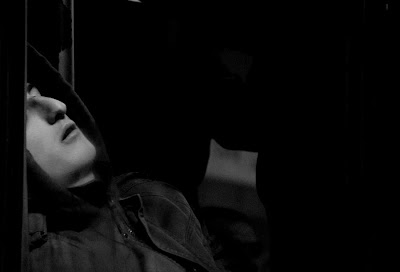
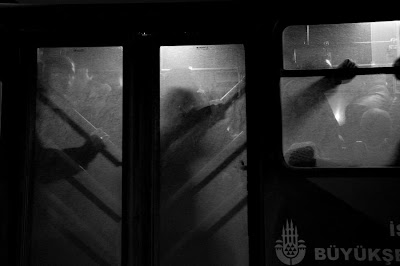
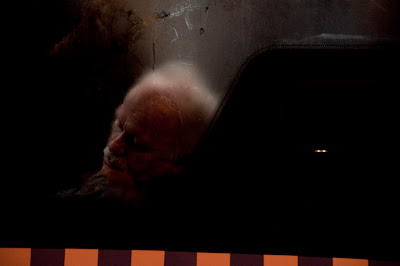
 All selections from Tuğba Yüksel's series, "The Bus"


Viewing a single print, or series of prints, by photographer Tuğba Yüksel borders on the sublime. I first became aware of her photography as she posted black and white renditions of these images in an online photography group. I was gobsmacked by the combination of simplicity of form and composition of her works with the seemingly contradictory layers of complexity of ephemeral streaks of condensation and swaths of frost on the windows of Istanbul's busses, obscuring her subjects. 


Whole areas of darkness would loom around the people she photographs on an almost daily basis with her Nikon, and it appears that for Tuğba, the dark is accorded the same importance that light is.


If photography is about light, then Tuğba Yüksel doles it out in selective, fleeting, and miserly doses. Somehow, this raises its value - like gold or alexandrite, a commodity's scarcity increases its intrinsic worth.


Later, upon further viewing her amazing portfolio of black and white images, I began seeing color versions of the same photographs Tuğba captured. To my way of thinking, my immediate reaction was disdain for the photographer not making up her mind as to whether the images ought to be in black and white or color. 


I am nearly 50, and not only was I trained in film photography, I still use film exclusively. When one loads black and white or color film, one is making a commitment to a particular style and the mode in which he wishes to present his vision; I regard most photographers in this digital age who share both versions as unable to make their minds up.


I still do. They do not think differently in black and white than they do in color, and the meaning of their photographs does not change when switching from one mode to another.


But, this is not the case with Tuğba Yüksel's series, "The Bus," and my I was wrong in my initial assessment upon seeing her color photographs.


For what drew me to her black and white method - the brilliance of chance streams of light, the infinite darkness of large patches of blacks and charcoal greys - defined the people in her images in stark tones as almost iconic. 


Their wearisome daily commutes, their stolen moments of precious rest and respite from their labours, the sudden and irrepressible smiles on two lovers' faces - juxtaposed with a solitary man's apparent loneliness, seemed etched in immortality in Yüksel's prints.


And yet, when one views them in color, one is technically viewing the same images, but enters an entirely different world: Here, the warm golden glow replaces the shimmer of antisceptic white. The colors are muted, but their presence is jarring in that amidst the darkness and cold, the presence of hue drops subtly festive hints and the sanguine into an otherwise gray daily commute. 


Now, we see not studies in shades of gray, but a rich aura of color that suffuses her compositions. Instead of the immediate made immortal through the freezing of time, we view the ride as part of life's continuum, of a rich panoply of emotions and experiences, her chiaroscuro studies of Licht und Schatten permeated with the bittersweet depth of life's attendant little triumphs and tragedies.


I do not know how old Tuğba is, but from her photographs she seems very young in years. Do not let that deceive you: She has what I once heard a rabbi describe as an "old soul." He meant the phrase as a compliment. 


In Yüksel's vision, we are not viewing a mere technical or even artistic achievement, but the emotional commitment of a very wise scribe of light. In fact, what we photographers call "vision" is wholly inadequate to describe what she is getting at.


Speaking through her chosen medium bilingually, in both black and white and color, Tuğba Yüksel imparts her artistic Weltanschauung with the deftness of an accomplished painter from eras long since past. Using modern tools, she reminds us that art was meant to be universal, transformative, and uplifting. It is as though through her photography, she has found a direct connection to people's souls.


Yüksel's prints recall the great photographic imagery of Paul Strand, Walker Evans, Weegee, and Chargesheimer.  But, when you hear the name Tuğba Yüksel, you also have to think Rembrandt, Degas, Goya, and Hopper.


Thursday, January 26, 2012

California Again

 Wool Growers' Restaurant
Los Banos, California, October 2009

I began my series on the farmers of California's San Joaquin Valley on this particular day, in October 2009.  I had begun photographing at the San Juan Reservoir early in the afternoon, and by the time I was finished, I asked the park guide where I could get a good meal.

He directed me to the famous Wool Growers' Restaurant in Los Banos, ten miles away.  Wool Growers' is a French Basque restaurant which serves its food - lamb stew, fried chicken, boiled cabbage and potatoes, and tons of bread and wine - family style.  I could barely finish half of my meal, though the farmers sitting nearby cleaned their plates.  Farming is some strenuous labor.

Sunday, January 15, 2012

Los Colores de Coahuila

 Dam reservoir along the Rio Grande
Presa La Amistad, Coahuila, Mexico, April 2001

The one thing I learned from A. Aubrey Bodine's spectacular photography of Baltimore and Maryland's Eastern Shore, is that a great photographer can never leave home, yet show us the world.  I have been in Minnesota three years, and still I cannot develop an affinity for the place.  (That's not to detract from Minnesota as photographic subject - Chris Faust has done wonders with the Gopher State).

This is where my heart is, the Mexican state of Coahuila.

I shot this exposure on one of the greatest films ever, Kodachrome 64.  Sadly, it is gone now.  
 

Friday, January 13, 2012

The Shape of Things To Come

 Parachute ride, Coney Island
Brooklyn, New York, November 1988

I don't plan on dying like Eggleston, with more than 1,000 rolls of exposed film still in the icebox.  I developed this roll of Agfapan 100 when I was a student at Hunter College, and quickly contact printed it.  But a project of street photography took over my interest straightaway, and I never got around to printing this one until nearly a quarter-century later.

Better late than never.


Monday, January 9, 2012

Los Colores de Coahuila

 
Ciudad Acuña, Coahuila, Mexico, April, 2001

Great news!  I will be having my first one-man exhibit in nine years, at the Firehouse Gallery, in Del Rio, Texas.  Friday, April 6, 2012.

Mark your calendars!


Friday, January 6, 2012

Oh, the Humanity!

 Hindenburg Memorial
Lakehurst Naval Air Station, New Jersey, March 2004
This photograph is from, literally, the oldest roll of film I ever shot. I acquired this roll, which had been stored in a cool basement since bought new by an old photographer friend of mine. I shot this photo of the Hindenburg Memorial on a roll of Kodak Panatomic-X, the fine-grained film that Kodak stopped production of in 1989. 
The Panatomic-X film we film photographers all know was rated 32 ASA. This particular roll was rated 12 ASA back in the day, and had an expiry date of April 1939. That meant -- film usually given a shelf life of three years -- this roll was probably manufactured sometime in 1936. Which means the film I finally exposed in 2004 -- 67 years after the Hindenburg disaster of May 6, 1937 -- actually predated the crash landing by at least one year.
I developed this in Kodak D-76. I used that developer as I hadn't the foggiest notion how to develop the ancient roll of Panatomic-X. Fortunately there was a data sheet enclosed in the film's box, and D-76 was one of the recommended developers still in existence, and as I happened to have some D-76, it came out pretty well. The negatives were rather dark, as the film was fogged after almost seven decades of storage. You can see little black spots on the film, which resulted from heat exposure.

Tuesday, January 3, 2012

Concrete Cathedrals

 U.S. Route 66, Landergin, Texas, November 1999

It's hard to believe that it has been more than twelve years ago that I began the series I now call Concrete Cathedrals.  I was on my way up out of Texas to photograph the Anasazi ruins at Mesa Verde.  I never got there, because I was captivated by the cement grain elevators which dot the landscape in the Texas Panhandle.  These particular silos are found outside the tiny ghost town of Landergin, about 10 miles west of Vega.

Since I photographed this image, I've visited hundreds of grain elevators in the United States and Canada.  It's the longest series I've worked on, and it will be my last book.  I don't ever plan on stopping work on Concrete Cathedrals.

Friday, December 30, 2011

Pentax Auto 110

 County Road 1, Ostrander, Minnesota, October 2011

You can't find 110 pocket camera film anymore, but I caught this photo - on a negative smaller than a thumbnail - on the versatile Pentax Auto 110 with 18mm prime lens, on Kodak Verichrome Pan 125 ASA film.  Lovely stuff.

Monday, December 26, 2011

Concrete Cathedrals

Off Interstate 37, Corpus Christi, Texas, May 2000

Rescanned the original negative at extremely fine resolution, and found beautiful nuances in Photoshop I never knew were there before.

Sunday, December 18, 2011

Concrete Cathedrals

U.S. Route 150, Fithian, Illinois, August 2011


I was so overwhelmed by the beauty of this grain elevator in Illinois that I previously only shot with my Polaroid Colorpack in June, that I returned in August to get a "proper" photograph with my Rolleiflex SL-66 on the now long-gone Agfapan 25.

Friday, December 16, 2011

Christmas Pictures!!!


Evan and Sarah wish you a blessed holiday season!

Saturday, December 3, 2011

Painting With Light

Portrait of Emily Tomlin, Rochester, Minnesota, November 2011

Or, this could be called film from the freezer, as I shot this photograph on a roll of Kodak Panatomic-X, 32 ASA film that expired in 1969.  It held up well.  I took this photograph with a tripod-mounted Rolleiflex SL-66, loaded with the great old stuff.  Zeiss Planar 80mm lens/f2.8, f5.6 at 1-1/2 minutes.

I only used two sources of light:  A 25-watt desk lamp behind the armchair, and a diffused flashlight.

Thanks to Emily Tomlin, especially, for being extremely patient and still during the shoot. 

Thursday, November 17, 2011

Garish - Retooling

Dairy Queen, U.S. Route 63, Stewartville, Minnesota, November 2011

It has been quite a long while since a film emulsion has excited me.  It used to be a quarterly -- sometimes even monthly -- event.  But with the ascendancy of digital and the waning of film, it's become somewhat akin to listening to a favorite band's long-awaited release on vinyl.

The last time I got this excited was the summer of 2010, when I returned from Barcelona with a number of exposed rolls of Kodak Ektar 100, and found that not only was the color superior to Agfa's old Ultra 100 emulsion, but that its grain was even finer than Agfa Ultra 50.  It was as though Eastman Kodak had retooled Ektar 25, but made it jump two stops without any loss in resolution.

Well, with the demise of Polaroid, I am starting to run out of their wonderful 669 and 690 Polacolor pack films I use in the Polaroid Colorpack cameras. So, preparing for the inevitable, I purchased a few packs of Fuji's FP-100C Professional pack film, which replaces Polaroid 690.

Now, while I shoot Polacolor for its obviously "off" colors (who doesn't love their loam green and cyan skies of 669 film?), I found the color way truer than even the 690 film, which was a vast improvement in color accuracy over 669.  In fact, the above photo recalls Fuji's marvelous E-6  emulsions, and instantly reminded me of many transparencies I have made on their Astia and Sensia films.  (The above has not been tweaked for color balance, nor for saturation).

Even more astounding was the exposure latitude on this stuff!  Whereas Polacolor (in either 669 or 690) would have had lost detail and murky shadowing in the darker areas, the Fuji maintained detail in both the shaded and shadow areas.
This is an astounding find!  Although this film has been around for a while, I was a Polacolor diehard.  I still prefer to use it (I honestly don't shoot it for reasons of color and tonal fidelity - I use it because of -- not despite -- its flaws).

Still, I have a new snapshot stalwart awaiting me when I run out of the great old stuff, and I am looking forward to new ways of seeing the things I shoot.


Monday, November 7, 2011

Garish - The Next Generation

 Trans-Canada Highway, near Lytton, British Columbia, Canada,
July 2011


I am not, by training nor inclination, a nature photographer. When God was passing out the Ansel Adams and Galen Rowell genes, I was in line for the Walker Evans and Pete Turner DNA.  Still, if nature has been altered, trimmed, and adapted by the hand of man, then I am attuned to this mutation, and it piques my interest and captures my eye.

Case in point: These young growth conifers in the mountains of British Columbia. They fascinate me as to how mankind can harmonize with nature, in a Grandma Moses sort of way

I'll leave the Muir Woods to those who can do it way better than I.

Friday, October 14, 2011

Stairways to Heaven

U.S. Route 87, Colfax County, New Mexico, February 2002

There is a story behind this memorial.  To be shared soon.... 

Tuesday, October 11, 2011

Film From the Freezer

 U.S. Route 63, Rochester, Minnesota, October 2011

A fun thing to do as a photographer, especially when I am bored, is to test film I've never used before.  In this case, the film is Kodak Vericolor Reproducing Slide Film 5072, which expired in July 1992.  I inherited it about eleven years ago when the folks at the Randolph Air Force Base photo hobby shop were getting rid of old and expired film, and it has been in my freezer ever since.

This Vericolor stock was never meant to be run through a camera, but rather was manufactured as a lab film for making 1:1 slides in C-41 process from E-6 and Kodachrome originals.

Apparently, time has also rendered it totally devoid of yellow and green hues.  The posts in the foreground are a blazing amber, but all that remains is the magenta. 

But, for blue and red objects, this seems to be just the film I was looking for!


Friday, September 30, 2011

Ali Sifuentes


Painting of Kentucky Fried Chicken on U.S. Route 14, Rochester, Minnesota
by artist Ali Sifuentes

Often when I eat at a fast food restaurant, I walk by and glance at the "art" many of them hang on their walls, from the annoying "inspiration" posters, to faded advertisements from the 1990s, all ensconced in those annoying metallic-gold lacquer plastic frames.

But, while stopping by the Kentucky Fried Chicken in Rochester, a picture actually did catch my eye. I thought, "who dreamt up the advertising ploy to paint a KFC restaurant a la Edward Hopper, all full of alarming hues and chiaroscuro? Someone on Madison Avenue knows what they're doing!"

But, on closer inspection, I saw that the painting was an original, and not some high-quality reproduction. I inquired about the artist. It turns out the artist is one Ali Sifuentes, a 20 year-old painter who works the fryers and the drive-thru at this particular restaurant. The painting is a gift he made to the restaurant.

Although my Motorola Z6C cheap camera phone can't do justice to the tonal balance, and the brush and putty-knife strokes, here is a somewhat acceptable photograph of the painting. Ali hails from Nuevo Laredo, Mexico, which is a border city across the Rio Grande from Texas.  When I mentioned the painting had a cinematic perspective and Edward Hopper feel, he smiled, and told me that was precisely the effect he was going for. Along with Hopper, he is a follower of Dali.  He has only been painting for two years, so until he was 18, Sifuentes must have had all this latent talent building up. Soft-spoken, and of diminutive stature, Sifuentes seems to be one of those artists who pays a lot of attention to the dull surroundings the rest of us take for granted, transforming them into something magical and arresting.

Wednesday, September 7, 2011

Road Less Traveled

 U.S. Route 12, Oakdale, Wisconsin, September 2011

Not to sound like Andy Rooney, but Have You Ever Noticed that whereas the old independent strip motels that dot our byways off the Interstate have character, that you would not want to actually stay there?

That's because they're are often run down, unhygienic, and you certainly wouldn't want to take a shower in Cabin 1 on some lonely, rainy night.  

I would much rather stay someplace luxurious and civilized, such as the DoubleTree Suites, in Minneapolis (/sarcasm).

Sunday, September 4, 2011

Daniel Raven Valdes, 1945-2011

Portrait of Daniel Raven Valdes, Santa Fe, New Mexico, March 2005
Copyright © 2005, Lori V. M. Montoya

Bad news travels fast, but the saddest news takes its time.  I learned last night that the acclaimed American Indian artist Daniel Raven Valdes, died of a brain aneurysm. He was 65.

I first met Daniel in 2005 when fellow photographer Lori Montoya interviewed and photographed him for an article I was writing on how the American Indian and native Spanish populations were being systematically pushed out of Santa Fe's old city through gentrification.

What most struck me about Daniel was that he exuded an inner confidence and graciousness one seldom encounters amongst artists--particularly Santa Fe artists.  But Daniel was a real Santa Fe artist, not just a transplant who moved into the local art scene and pushed out the local artists.  Father Sun-Mother Earth, his gallery, planted its roots way back in 1976, and for over thirty years, Daniel was adamant about remaining the "last man standing."  He wasn't a bitter individual, just someone who knew his worth.  He was a fixture of the downtown scene for friends of his, like Lori, and another fellow artist, Cruz Eagleheart, and with his characteristic modesty, likened his gallery to the Woolworth's lunch counter, always making his art accessible to anyone who admired it, whether well-heeled, or on a student budget.

Daniel's work was gorgeous, but his best work--painstakingly done on scratchboard--had to be experienced in person, to appreciate its intricacy and texture.  He possessed an eye for color that was in keeping with the tradition of so many great New Mexican painters, not of the Georgia O'Keefe school, but in comradeship with the airbrush wielding artisans, waxing poetic over lowriding '63 Impalas in Española body shops.

Mother Wolf, Copyright © 1990 by Daniel Raven Valdes

In honor of Daniel's memory, there will be a gathering at Embudo Station at 1 p.m.,  Sunday, September 18th, in Santa Fe.

Daniel Raven Valdes at his gallery at 124 Galisteo
Santa Fe, New Mexico, March 2005
Photograph by Robert Jones
 

Friday, September 2, 2011

Madhi Choudhury, Graphic Artist

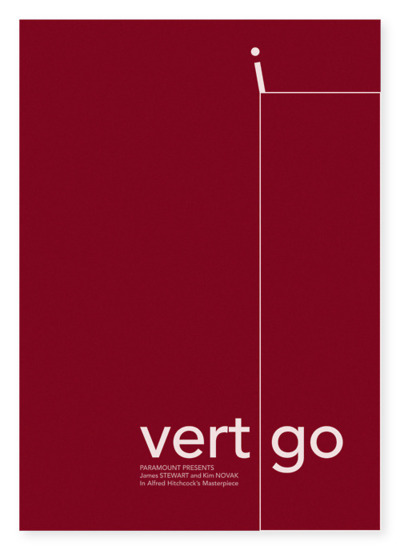
Mahdi Choudhury's reimagining of a poster for
Alfred Hitchcock's masterpiece, Vertigo

Sometimes, a graphic so totally bowls me over, I have to share it on my blog.  Case in point: Toronto artist Mahdi Choudhury, who has taken Kim Novak's silhouette from a key scene in Alfred Hitchcock's masterpiece, Vertigo, and transformed it into an arresting stand-alone graphic.

While I do not think Choudhury captured the thematic essence of the movie, he brilliantly distilled its emotional impactCompare that with Kate Whelan's design (see below), which captures the movie's theme splendidly, but totally lacks Choudhury's emotional connection.

I am certain the world will soon know Choudhury's work the way it does Saul Bass's or Paul Rand's -- the quite accomplished graphic designer is but 14 years old, though his soul is much older.

(Hat tip: Dan Auiler).   


Tuesday, August 30, 2011

Happy Accident

Trans-Canada Highway, outside Parkbeg, Saskatchewan
August 2011
Shooting with my Polaroid Super Colorpack, I had left the focus ring set at 5 feet from the previous photograph I took, a portrait.  I retook the shot, but actually prefer the heavily-diffused look (called "soft focus" nowadays, a euphemism for "out of focus").

I can't pull a Pee Wee on ya, and say "I meant to do that."  I didn't, but so what?  The results are just the same.

Sunday, August 28, 2011

Tomatoes!

 Tomatoes on conveyor belt to washer
Ingomar Packing Facility, Los Banos, California, July 2011


It slices, it dices, look at that tomato! You could cut a tin can with it, but you wouldn't want to!

Saturday, August 27, 2011

You Can't Go Back Sometimes

Cedarhof Restaurant
Trans-Canada Highway, Wawa Ontario, Canada, August 2011
The first time I traveled the Trans-Canada Highway, in October 2002, I pulled off at this charming restaurant and had an expertly-cooked German meal that still makes my mouth water, just remembering it: Hungarian goulash soup, buttered rye bread, and a Wienerschnitzel, lightly breaded, that just melted in my mouth.  

Every time thenceforth I traveled the Trans-Canada, I would pass through Wawa too late at night for it to be open. So, this time I set out early enough to make it there in time for dinner. 
No matter: I found that the Cedarhof had been closed down eight years ago, which means on my five subsequent journeys -- beginning in 2004 -- it had been out-of-business all along; I just didn't know it yet.

I assumed it was still opened, as it is still listed on Wawa's tourist website promoting its businesses.

You just never know.

Friday, August 26, 2011

Pixley Tire Shop Revisited

Pixley Tire Shop, off State Highway 99
Pixley, California, July 2011

I always like to revisit places I've photographed before, particularly during different times of day, and even seasons, when the light is different.  In this case, I was able to photograph the south face of the tire shop in Pixley, California, which I had previously visited in November of 2009.   Using my Nikon this time instead of a camera phone, and some rather flat Kodak Gold 400, I got an interesting look for this shot I took around 9:00 am.

Wednesday, August 24, 2011

Tomato Harvest In the San Joaquin Valley

Tomatoes and Vista of California's Coastal Mountains
Huron, California, July 2011

Dear readers, my apologies for being "gone" most of the summer.  If this were any normal blog, I'd be updating it via my Blackberry, Droid, or iPhone.  But, being the low-tech Luddite I am, I still do things the old-fashioned way -- on film.

I spent two weeks in the San Joaquin Valley of central California this summer, capturing the majestic vistas found there, farmers and farm laborers doing the backbreaking -- yet highly efficient -- work of putting food on America's and the world's dinner tables.  The panoramic vistas I snapped on the Hasselblad X-Pan, and the grit, grime, and guts of the people bringing the harvest to market I shot on my trusty Nikon FM-3A.  Instead of cards and memory sticks, I captured these images on Agfa's brilliant Optima II 100 film (see above) and Kodak Tri-X black and white 400 ASA.

It was worth the wait.